Forced Disappearances
Once in other places, now here

When I was in my early twenties, I visited the Basque Country (Euskal Herria) while travelling and hiking around Spain. I went to the north of Spain alone and, since I was sleeping in caves; on rocks, desert floors (on a tarp where I woke up to a scorpion next to me [just in time!]), windy mountain tops (wrapped in a tarp with my best friend who ate a clove of garlic for supper [or was that me?]) and benches, or at hostels along the Camino de Santiago (even found a shed in the Alhambra to crash out in a while), I figured I’d find a squat to stay in a few days.
When I found the squat, it wasn’t the kind I was expecting. It was a gaztetxe, which was more of a community center run by kids (“young adults”) who were both supporting the community (for example, they had places where teenagers could come and practice rock climbing, a free vegetarian kitchen, throwing concerts) and engaging in a lot of political activity such as organizing protest marches. This was back when ETA was still active. But I never met any such persons.
Nevertheless, the people I met in Kukutza Gaztetxea were radical socialists, which confused me because at the time, I thought that was all over and done with. They were also a lot less individualistic than kids in the USA and surprised me by talking about “we” and “us” a lot moreso than “I.”

Kukutza was a glorious place. The local kids took an old factory and made it their own. Homeless kids (not bums, but itinerant or something, like me) could stay there (if vetted) and there was always a lot of the positive, colorful energy that communal living and creative association (lots of people hung out there or came for events or shows) combined with a sense of purpose and urgency—and the vibrancy of youth—generates. If you read about Kukutza Gaztetxea, you can see it was a very important community center.

The second time I was in Bilbao (Bilbo), in the summer of 2003 (after a little adventure not getting gored to death by bulls in the streets of Estella), I bought some books on Spanish constitutional and human rights law and spent some time reading them (slowly with a dictionary). I could already speak the language decently (after five previous months in Spain followed by working in Mexican and Cuban restaurants), but I was really curious about the legal relationship between this unitary state’s center and its autonomous regions like the Basque Country. I also wanted to understand what the actual laws were. These kids were telling me many things I don’t clearly remember: their language revitalization efforts and genuine struggles against certain types of oppression and police brutality. I heard quite a bit about the brutal raids on this and other community centers, and, most concerningly, I learned about detainment incommunicado without due process and other human rights abuses (Amnesty International Report).
Growing up in the good old US of A, I had never really had to worry much about such things.
Not too long after that, I went to Ingushetia, a (nominally) autonomous republic in the North Caucasus, a culturally unique region currently occupied by the Russian Federation. I was studying Russian constitutional law, international law and the Russian language (thank God no Pushkin that time around! not a fan of poetry…) at MGIMO in Moscow while doing research for an MA thesis about Russia’s post-Soviet (illegal and unprovoked) war of aggression against the innocent people of Chechnya who were not terrorists but being treated like it. This was late 2004 and early 2005. I had gone there to get some newspapers from a local paper at the time (Chechenskoe obshhestvo) so I could analyze how many reports of terrorist attacks there were and of them how many were actually hits on legitimate military targets (like, all of them) and get some better insight into local opinion.
While at the newspaper’s office, I dropped into the human rights center next door and befriended the local human rights workers there (mostly lawyers and a journalist). They were Ingush and Chechen by ethnicity, and some had come from Chechnya as refugees. I stayed about two weeks, I reckon, and in that time I went around and met the children who had survived the Beslan terrorist attack, Ingush refugees from Prigorodnyj rajon and more Chechen refugees. (Some Italians in a collective from Turin on a caravan trip brought me along to interpret for them as they gave out presents to children. Those children told me a lot. This was it: YouTube [starts at 10:39])
While in Ingushetia, which it turns out was an active insurgency zone (you’d never know from Russian TV), I learned a lot about fake news reports misrepresenting reality, war crimes against civilians, wanton torture, gang rape, blowing up people’s heads for fun (Note: not my idea of fun, the perpetrators’), widespread arbitrary forced disappearances, getting hauled off at checkpoints for being a man, secret detentions and extrajudicial killings. As part of Russia’s “Chechenization” strategy, aimed at pitting Chechens against each other so that the society would lose its cohesion and ability to resist and effected through Moscow’s massive financial and material support of the Kadyrov “dynasty,” Ramzan Kadyrov—the son of Chechen turncoat Axmad Kadyrov (who had recently been assassinated)—and his men were just going around kidnapping whoever they wanted, throwing them into secret prisons (holes) and torturing them. Most often, they would never be heard from again. And they were usually regular people, not the insurgents. But the goal was to terrorize the population into submission and impose total control. Perhaps they also wanted to make sure there were even fewer men left to fight or even take care of their families.
It was my first exposure to this degree of depravity.
Underlying my visits to such places where human rights meant nothing (or are not fully respected for everyone), grey zones where laws no longer apply and the wicked reign free, there was always the notion, however nebulous and faint, that I get to go home. For all its imperfections and failures, the United States of America was a country where at least we mostly had a decent system for preserving the rule of law and no one would just kidnap you off the street for some arbitrary reason, detain you indefinitely without due process, refuse to inform anyone where you are and leave you there to rot till you die, or kill you. It was a country where we could say whatever we want about politics or policies without fear of being kidnapped and tortured. It was a country where I didn’t have to whisper any criticisms of the party while huddled up in my kitchen (like in Stalin’s Russia or in Kadyrov’s Chechnya, last time I was there, about ten years ago), hoping my family member or dear friend didn’t betray me to the secret police because were so brainwashed they thought it was a good deed (or they had to because they’d gotten into some predicament, or they were just jealous about some dumb thing).
But I can sense and see that the USA is heading in that direction. It starts slowly, with the attacks on the “other,” i.e., the other ethnic group, the other economic class (e.g., homeless), the other religion, the loud protesters who annoy me because they think differently and I wanted to drive home faster.
Before too long, especially if ICE continues to run rampant with “unlimited” funding and Palantir gets its way, you will lose your freedom of speech and assembly, without which you will be unable to protect your freedom to pursue life, liberty and happiness. Me too.
Want fair wages? You will not be able organize your profession or workmates to demand reasonable pay. Dislike poisonous chemicals in your food? God forbid you get in the way of a senator who’s been paid off by a huge food corporation that wants to feed you contaminated or mislabeled food to poison you for more excessive profit. To be fair, we already fail to do nearly enough as a society to address such issues. But we have had the freedom to do so, and our ancestors doing so have played a key role in making this country the envy of the world.
It is a slippery slope (a real one, not the logical fallacy). We have already seen the incremental (yet rapid) shifting of the boundary posts. At first, they announced they were only going after the undocumented or “illegal” immigrants who were violent dangerous criminals and gangsters (abcnews.go.com). Then we started hearing everyone who has ever entered the USA without the proper authorization (including children who had no choice in the matter) or overstayed their visa is “illegal” and deserves capture and deportation—even if they have since obtained legal residency or refugee status. The administration “de-legalized” at least a million people by kicking them off various programs that had given them legal status (NBC News). Then they got the Supreme Court to lean heavily towards allowing them to change the law so that they could use racial profiling to determine targets (American Immigration Council). Note, the main targets are people who look like they are from Central or South America, that is to say, people whose ancestors have been in the Americas far longer than those of European descent. That could explain why they’ve also been capturing Native North Americans, pretending these people are lying about their citizenship or tribal membership when presented with their ID (Native Americans are US citizens) (The Guardian). To me this looks like someone wants to return to a genocidal colonization policy. Finally, ICE agents have even been detaining US citizens incommunicado under alleged suspicion of being “illegal” or just for legally recording their abuses of power (opb.org, ProPublica, ACLU).
In ways I once thought only happened in other places, these fellow humans (undocumented migrants, immigrants in the process of obtaining asylum, residency or citizenship and, at times, US citizens—but very rarely actual dangerous criminals) are being grabbed off the streets by unidentified masked men in combat or riot gear holding assault rifles and being thrown into unmarked vehicles and hauled off to undisclosed locations to be kept indefinitely without due process in holding facilities little better than a South African jail (yes, far worse than the pen) until deported to some hellhole, or, if they’re lucky, maybe a relative persists in tracking them down and convincing someone with authority they are a real citizen (NPR, news.wttw.com, American Immigration Council). These hapless souls are also being denied court hearings. How is this legal? It’s not (IRC, ACLU). (Does the attorney general even know what habeus corpus is?) (No.) If the agents refuse to believe you are a citizen or a legal immigrant and you cannot go to court to have a hearing and get the truth out about it, well you are, to put it nicely, up the creek without a paddle.
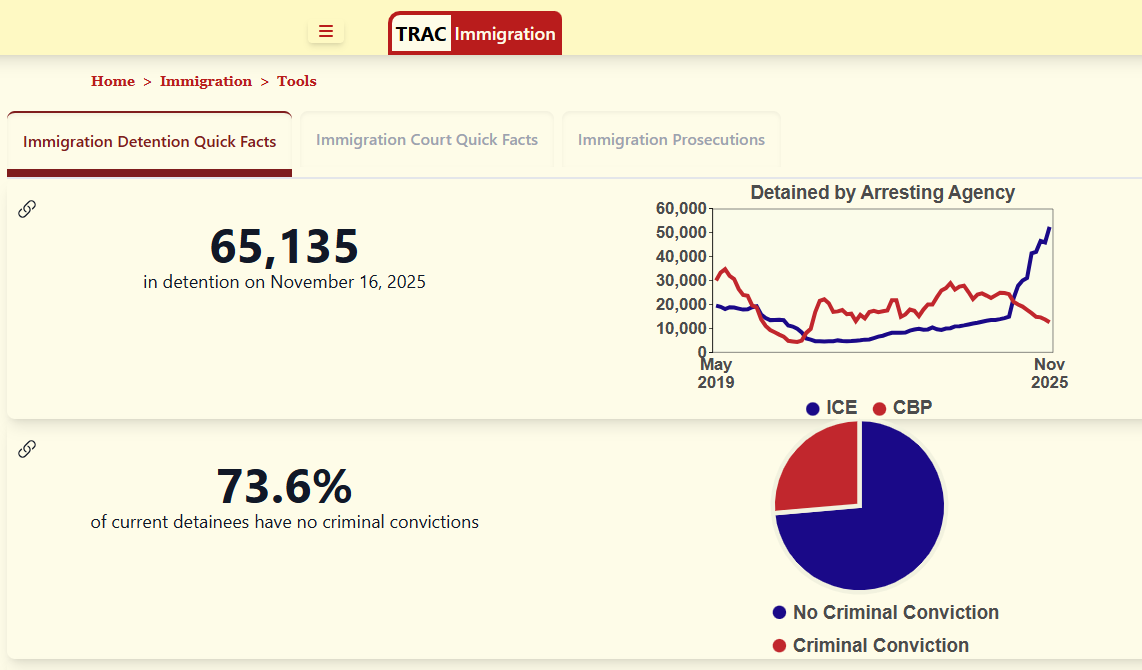
Like most U.S. citizens, I certainly do not believe that we should allow unchecked waves of undocumented migrants into the country. This allows for their exploitation by companies that do not want to pay a fair wage to them or us, and other social ills. It should be noted that, despite popular belief, they do not have free health care except for some emergency room visits, SNAP, or other federal benefits available to documented immigrants and citizens (congress.gov). But even undocumented immigrants here illegally still have human rights. Because they are human. Furthermore, the Bill of Rights applies to non-citizens, too. They have the constitutional right to due process and a fair hearing, and their homes cannot be entered without a warrant (Clearwater Law Group). If we do not respect that, we are disrespecting the Constitution.
Yet, evidently, despite the whole Bill of Rights thing, according to ICE (and Congress), it is technically “legal” for ICE agents to approach anyone they see in a public place and talk to them in order to determine if they “suspect” said person is an undocumented migrant and then take that person away if they so determine (ice.gov). The argument here is that entering or remaining in the USA without proper authorization is a civil not criminal violation and, therefore, the usual rules for criminal arrests and detentions do not apply. That strikes me as a wee bit odd reasoning though, since they are, in fact, calling these people criminals and treating them as worse than such.
Indeed, deportation is normally accomplished through a civil legal process and is not a criminal offense. It is more like a bureaucratic procedure where the appropriate legal authorities find undocumented migrants, put them through a court procedure and send them back to their home country. Overstaying their visa is not a crime for them to be treated worse than a rapist or murderer. It is not a crime for which they should forfeit their right to dignity, health and life.
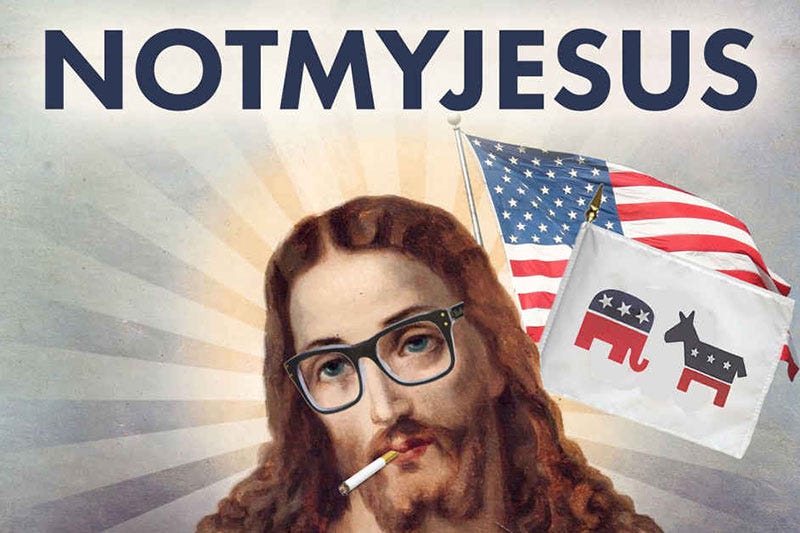
Be forewarned, those of you for whom this is not already bloody obvious, if we tolerate human rights abuses against “foreigners” today because they are “illegal and/or brown,” such a laissez faire attitude will come back to bite us in the Achilles heel. Soon, we will all be suffering from the same surveillance system and legal and human rights abuses. But this call to respecting justice is not just about what rights and freedoms we as US citizens could ultimately lose. It is very much about our fundamental humanity. Is this kind of “law enforcement” really reflective of a moral society? One could argue that the Western sense of law and justice stems largely from the Christian tradition (or Judeo-Christain tradition). So, is this truly Christ-like behavior?
While most of us agree that we need a sane and sober immigration policy, and to do far better about protecting our borders, immigration policy must not be implemented à la Ramzan Kadyrov. We should not allow ourselves to even inch in that direction. If we cannot demand and ensure our government acts in a humane fashion towards “the least of these my brothers” and does so without breaking and bending the laws so far that they lose all their meaning, then it won’t be long before masked men in combat gear, toting machine guns and shoving them in our faces, are hauling “the best of us” off in unmarked cars to await indefinite detention at secret facilities and endure the torture of sadists just because we reposted an obscene meme about the president—or annoyed Karen from the HOA.